
Food & Drink
Overview
Gianduiotto, bicerin, agnolotti, vermouth and Barolo - Turin's culinary specialities, with historic cafés, chocolate factory tours, wine bars and real prices at a glance.
Turin is one of Italy's great food cities and holds a distinctive place in the country's culinary landscape. This is where gianduja chocolate, vermouth and the bicerin were invented, and Piedmontese cuisine brings its own classics to the table with agnolotti, vitello tonnato and bagna càuda. This guide sets out the key specialities, names addresses and prices, and is upfront about what's free to enjoy and what needs booking.
Turin's chocolate tradition began with a shortage. Napoleon's Continental Blockade, imposed in 1806 and in force until 1814, made cocoa imports to Europe scarce and expensive. Turin's chocolatiers stretched the costly cocoa with ground hazelnuts from the surrounding countryside - using the Piedmont-grown Tonda Gentile delle Langhe variety. That's how gianduja, the blend of cocoa and hazelnut paste, was born.
The praline made from it, the gianduiotto, with its distinctive gold-wrapped ingot shape, emerged around the middle of the 19th century. Sources don't agree on an exact date - 1852 is often cited, when Pierre Paul Caffarel and Michele Prochet were among the first to grind hazelnuts into paste and blend them with cocoa. Caffarel itself brands the product "The First One since 1865" and dates the public unveiling to Turin's 1865 carnival, when the pralines were reportedly thrown into the crowd. The name comes from the commedia dell'arte mask Gianduja ("Gioan d'la Duja", John of the Jug), an honest Piedmontese character whose three-cornered hat is said to have inspired the praline's shape.
The shops run by Turin's chocolate houses are open to everyone to browse, you only pay for what goes in the bag. If you want to see behind the scenes, there are three well-documented options:
Stratta (Piazza San Carlo, since 1836), Baratti & Milano (since 1858, at the Galleria Subalpina) and Venchi are shops and historic café-confectioners without factory visits. Caffarel has produced its chocolate since the 1960s in Luserna San Giovanni, around 50 km from Turin; there's a factory shop there (Monday to Saturday 09:30 to 18:30), but no public tours. Streglio (part of the Galup brand since 2021, production in None) doesn't offer regular tours either, a chocolate museum has only been announced so far; its products are sold at, among other places, the store on Via Andrea Doria.
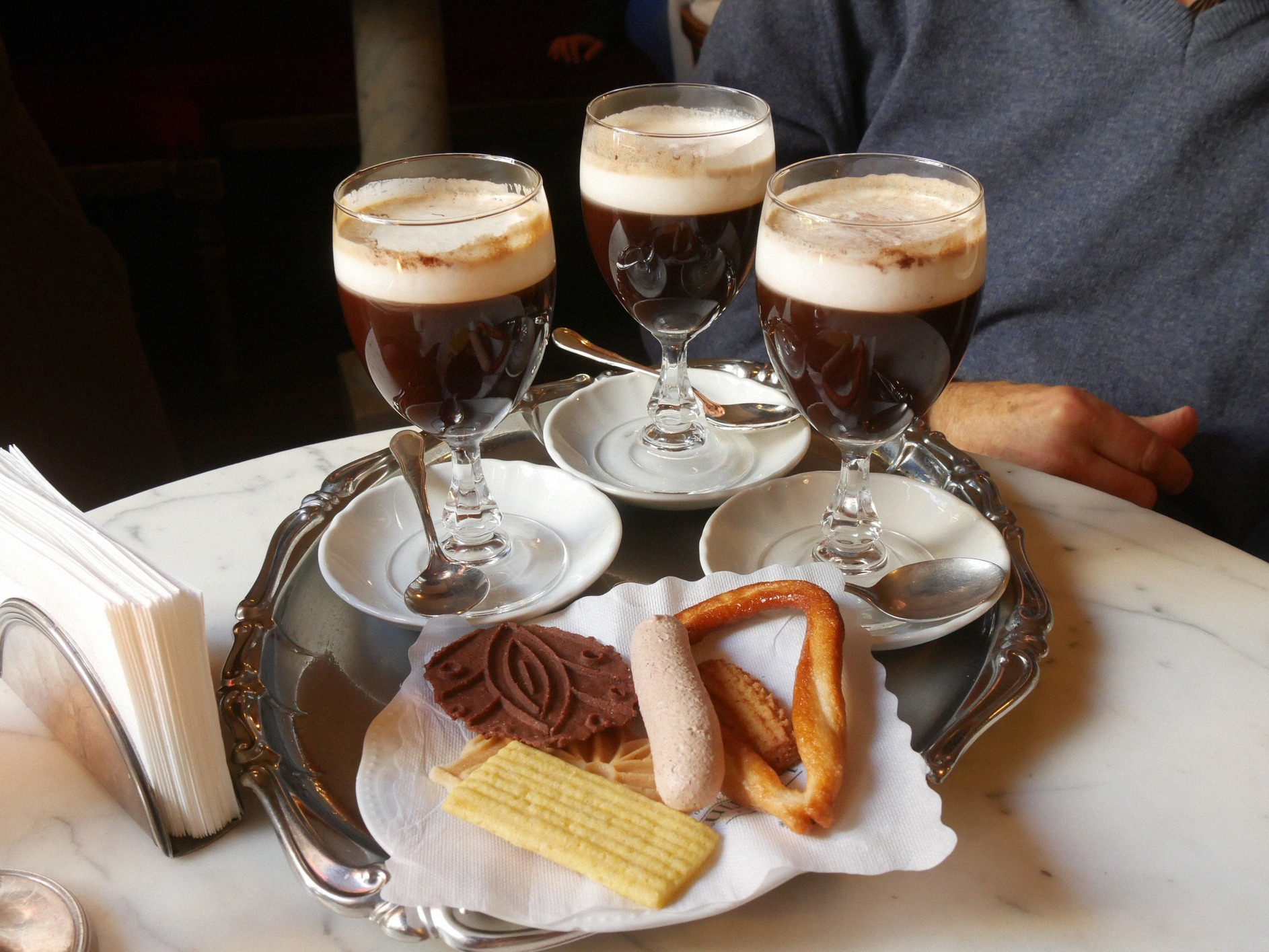
Turin's unofficial signature drink is the bicerin (Piedmontese for "little glass"): three layers of espresso, hot chocolate and milk foam, served in a glass. It was invented, and is still served, at Caffè Al Bicerin, Piazza della Consolata 5, founded in 1763 by Giuseppe Dentis. For a long time it was the city's only café open to everyone and run by women; regulars over the years have included Cavour.
It's open daily from 09:00 to 19:15, closed on Wednesdays (with some exceptions). In 2026 there's a winter closure from 12 to 16 January, a summer closure from 29 July to 28 August, and a closure for the San Giovanni city festival from 22 to 24 June; it's also closed on 25 December and 1 January, and on 24 and 31 December service ends at 16:00. A bicerin costs around €7 at the original address. For more on Turin's café culture, the four great historic houses and the evening aperitivo ritual, see the guide to the historic cafés and aperitivo.
The dishes on the table here are more closely tied to Piedmont than to standard Italian fare. Typical dishes include agnolotti (filled pasta parcels, often served as agnolotti al sugo d'arrosto), vitello tonnato (cold sliced veal with tuna sauce), raw carne cruda, bagna càuda (a warm anchovy-and-garlic dip for vegetables) and fritto misto alla piemontese. Crisp grissini breadsticks are a staple, and desserts often run to zabaione or a hazelnut cake.
Reliable addresses for these classics:
As a rough guide to budget: a piola often comes in under €25 per person, a mid-range trattoria around €40 to €60, and fine dining over €100. Individual dish prices vary by restaurant and are worth checking on the day.
Turin is the birthplace of modern vermouth. Antonio Benedetto Carpano first blended it in 1786, based on white wine from the Moscato grape with more than 30 herbs and spices; his shop stood on Piazza Castello opposite the Royal Palace, and King Vittorio Amedeo III became a regular customer. That founding moment of the aperitivo still shapes the city today: well-known addresses include the Art Nouveau Caffè Mulassano on Piazza Castello (a large vermouth selection, and the birthplace of the tramezzino sandwich in 1926), Caffè Torino on Piazza San Carlo (founded in 1903), and smaller specialists such as Vermuttino on Via Bonelli. For how the aperitivo unfolds, what an apericena costs (usually €10 to €15) and which neighbourhoods host it, see the guide to the historic cafés and aperitivo.
For a deeper dive into vermouth history, head to Casa Martini in the nearby town of Pessione
Turin itself isn't a wine-producing city, but it's an ideal base for exploring Piedmont's great red wines: Barolo, Barbaresco, Barbera, Nebbiolo and Dolcetto all come from the surrounding region. You can taste them at the city's wine bars, all open to everyone, with payment only for what you drink or for a booked tasting: