
Best Time to Visit Turin
Spring and autumn are ideal, summer is hot but quiet, winter brings clear Alpine views and skiing. Turin's weather, seasons and events at a glance.
Contents
Turin can be visited year-round, since its main sights are museums and palaces that don't depend on the weather. Even so, each season has its own character, from the Baroque gardens in bloom in spring to the snow-capped Alps behind the city in winter. This guide walks through the climate, crowd levels and key dates so you can plan your trip around what matters most to you.
Spring (April to June), the most beautiful but busiest time
Spring is climatically ideal: the average daily high rises to 18°C in April, 22°C in May and around 26°C in June (figures from the Caselle weather station, 1991-2020). The gardens of Venaria Reale and the Parco del Valentino are at their best, and it's pleasantly mild for strolling under the arcades.
What many visitors don't expect is that spring is also the peak season for demand. The Egyptian Museum had a record year in 2025 with over 1.27 million visitors, driven by spring - April brought the highest footfall, while May saw the strongest growth at plus 35.5 percent. To dodge the crowds, book tickets online in advance and avoid the midday hours.
Two things are worth planning around: May is the wettest month, with around 127 mm of rainfall, and short afternoon thunderstorms are common in May and June, a light rain jacket is worth packing. On the cultural side, the Torino Jazz Festival is a highlight: the 14th edition runs from 25 April to 2 May 2026, with 101 events across 72 venues and many free concerts.
Summer (July and August), hot, but unfairly overlooked
High summer brings the hottest temperatures: the average high is 29°C in July and 28.6°C in August, and the air in the sheltered Po Valley can feel humid. It's noticeably drier than spring, though, with around 77 mm of rain in July and 66 mm in August.
The old idea that half of Turin closes in August is out of date. The city no longer empties out over the summer; thanks to a deliberate push to extend the season, about 30 percent more restaurants and bars stayed open continuously through August 2025 than the year before, according to the hospitality association Epat. Hotel occupancy in August 2025 was forecast at around just 55 percent, making summer the quietest, and often cheapest, time to visit.
Three reasons summer is worth considering:
- Air-conditioned museums. On hot days, the fully air-conditioned Egyptian Museum is an ideal way to spend a few hours. It's open Tuesday to Friday and Sunday from 09:00 to 18:30, Saturday until 20:00, and Monday only until 14:00; standard admission is €18, with tickets sold online only.
- Long evenings. The longest day is 21 June 2026, with 15 hours 37 minutes of daylight, and the latest sunset falls around 21:21 in late June. Even at the height of summer it stays light late into the evening, ideal for a late walk along the Po.
- Fewer crowds. If you want to avoid queues and peak-season prices, July and August are the most relaxed months to visit.
Autumn (September and October), the richest time for food and wine
Early autumn combines mild weather with Piedmont's most exciting season. The average daily high is still 24°C in September and 18°C in October, comfortable for both the city and day trips. At the same time, the grape harvest gets under way in the Langhe hills: from early September to late October, wineries around Barolo and Barbaresco open their cellars for tours and tastings. More on this in our day trips from Turin.
The highlight of autumn is the Fiera Internazionale del Tartufo Bianco d'Alba: the 96th edition runs from 10 October to 6 December 2026. The world truffle market takes place at weekends - Saturdays 09:30 to 19:30, Sundays 09:30 to 19:00, at the Cortile della Maddalena and other historic squares in Alba. Contrary to what many assume, the fair is open to the public, with cooking classes, tasting labs and activities for children alongside the trade side.
In Turin itself, September is a busy month on the calendar: the Salone Auto Torino turns the city centre into a free, open-air motor show from 11 to 13 September 2026, with over 40 manufacturers and test drives. Alongside it runs the classical and contemporary music festival MITO SettembreMusica, which traditionally takes place from early to mid-September (exact 2026 dates had not been confirmed at the time of writing).
Winter (November to March), clear Alpine views and skiing
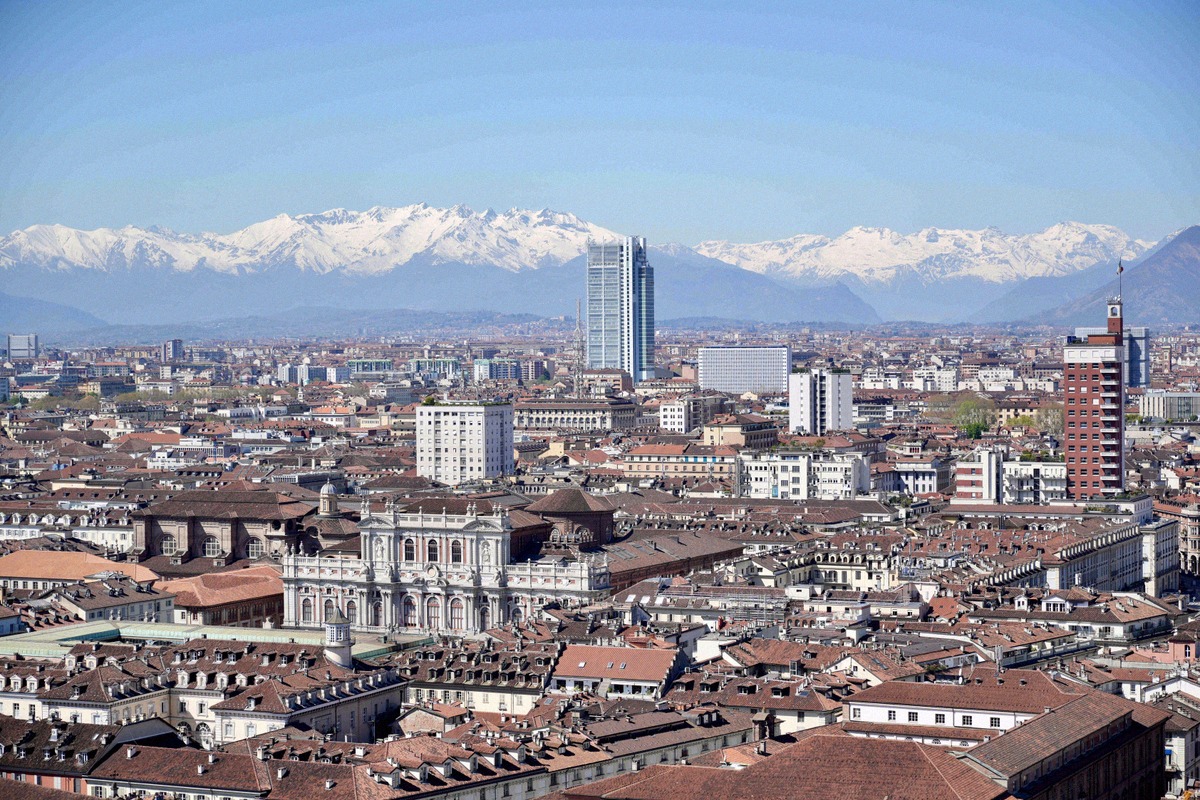
Winter is cool and often misty, but it has two strong points in its favour. On clear days, the snow-capped Alps appear close enough to touch behind the city, nowhere more so than from the hilltop Basilica di Superga. From 1 March 2026, winter opening hours apply there: weekdays 10:00-13:30 and 14:30-18:00, weekends 10:00-19:00 continuously. The climb up to the dome, 75 metres above ground, offers a full panorama over Turin and the Alps, but is closed in bad weather. The historic rack railway from Sassi runs hourly again from 3 April 2026 (uphill 10:00-18:00).
The second draw is the snow itself: several ski areas are within an hour to an hour and a half of the city centre. The Via Lattea (Milky Way), with around 400 km of pistes, is one of the largest ski areas in Europe; Sestriere, at 2,035 m, is about 102 km away and considered reliably snow-sure, while Bardonecchia is just over an hour away. The ski season typically runs from December to April.
Late autumn and early winter have their own atmosphere thanks to Luci d'Artista, Turin's citywide light-art trail. The 28th edition ran from 24 October 2025 to 11 January 2026 with 32 installations, including works by Tracey Emin and the Soundwalk Collective with Patti Smith. The annual edition usually runs from late October to early/mid-January; exact dates for the next edition, late in 2026, had not yet been confirmed at the time of writing.
In short, the right time for you
- Best for culture and strolling: April to June and September to October. Mild weather, long days, a full events calendar, though spring brings the biggest crowds and frequent afternoon thunderstorms in May/June.
- Quietest and often cheapest: July and August. Hot, but with air-conditioned museums, long evenings and more open restaurants than the reputation suggests.
- For food and wine lovers: October, grape harvest in the Langhe and the truffle fair in Alba.
- For Alpine views and skiing: clear winter days from Superga, plus the pistes of the Via Lattea and Bardonecchia within an hour to an hour and a half.
If you're combining several paid museums and residences, it's worth checking the Torino+Piemonte Card regardless of the season.