
Where to Stay in Turin
Which neighbourhood suits your trip? Location, price levels and transport links for the best areas to stay in Turin, from the old town to San Salvario.
Contents
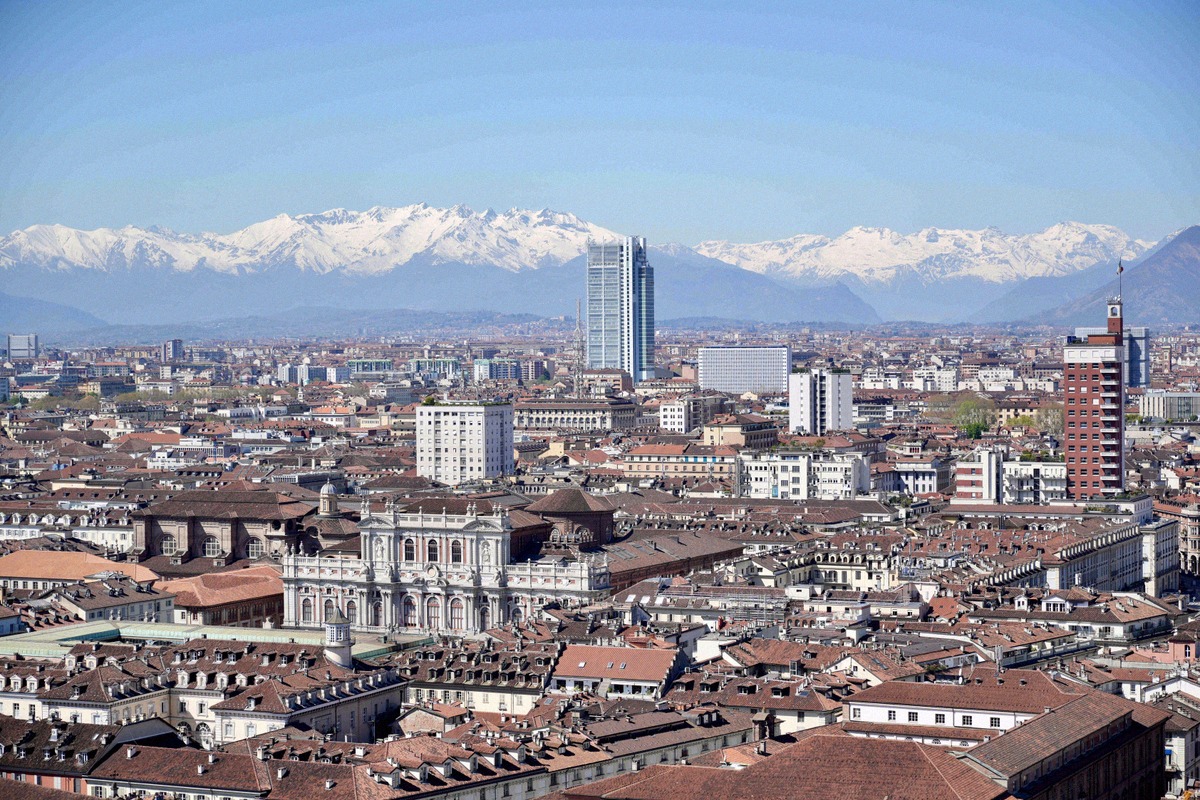
Turin is compact, well connected and, for now, cheaper than Rome, Florence or Venice. Most of the major sights sit close enough together that choosing a neighbourhood is less about distance and more about character, an elegant centre, a lively nightlife district, or a quiet Art Nouveau quarter. This overview sorts the areas by travel style, price level and transport links, so your booking matches your trip.
Centro Storico, the obvious choice in the centre
The historic centre around Piazza Castello is hard to beat, because almost everything is within walking distance. Palazzo Reale and Palazzo Madama sit right on the square, and the San Giovanni Battista cathedral with the Cappella della Sindone and the Giardini Reali are only a few minutes away. It's about 1.45 kilometres to the Mole Antonelliana along Via Po - roughly 15 to 20 minutes on foot, and the 167.5-metre tower houses the Museo Nazionale del Cinema. Staying here cuts down on travel time and puts you close to the nightlife districts in the evening.
You pay for the convenience, aggregator data shows the central zone around Porta Nuova station running roughly a third above the city average. Across all categories, a 3-star hotel in Turin averages around €120 to €130 a night; in the Centro Storico, budget for the upper end of that range. Precise per-neighbourhood nightly rates can't be pinned down reliably, as they swing a lot with dates and booking demand. More on the individual buildings on the square is on the Centro Storico page.
San Salvario, young, lively and the cheapest option
Right behind Porta Nuova lies San Salvario, Turin's nightlife district. The main streets are Via Sant'Anselmo, Via Belfiore, Largo Saluzzo and Via Giuseppe Baretti, plus Via Berthollet and the market at Piazza Madama Cristina. By day it's a lively, multicultural residential area with cafés and small shops; by night the bars and clubs around Largo Saluzzo, Via Baretti and Via Sant'Anselmo fill up, exactly what makes the area appealing, though it can also get noisy. A courtyard-facing room isn't a bad idea here.
On price, San Salvario is the cheapest of the central options, with entry-level rates that, according to aggregator data, start well below the city average. If you want to try the neighbourhood's scene, it's concentrated in a handful of addresses, the Dash Cocktail Bar & Street Food on Largo Saluzzo, the Mara dei Boschi ice cream shop, and Caffè Orso Laboratorio on Via Berthollet, plus the Samambaia roastery on Via Madama Cristina. More on the area is on the San Salvario page.
Crocetta and Cit Turin, quiet, refined, Art Nouveau
West of the centre lie the elegant residential districts of Crocetta and Cit Turin - quiet, upmarket, and the city's Art Nouveau strongholds. If you like Turin's Liberty architecture, this is where you'll be surrounded by some of Italy's finest examples. The most famous address is the Casa Fenoglio-Lafleur from 1902 (architect Pietro Fenoglio) on the corner of Corso Francia and Via Principi d'Acaja, often called the country's most important Liberty-style building; not far away stands the 1904 Casa Girardi at Via Cibrario 54, along with further buildings around Corso Francia and the Politecnico.
The location is upmarket and quieter than the centre, priced between the expensive Centro Storico and the cheaper San Salvario, though budget options exist in Crocetta too, so it isn't uniformly pricey. Transport links are good despite the residential feel, more on that in the metro section below and on the Crocetta page.
How well each neighbourhood is served by the metro
Turin currently has just one metro line, the fully automated M1, with 23 stations between Fermi/Cascine Vica and Bengasi. Through the centre, the stations run in this order - Porta Susa, Vinzaglio, Re Umberto, Porta Nuova, Marconi, Nizza, Dante, Carducci-Molinette and on to Lingotto. That makes choosing a neighbourhood easy, since every area above is only one to three stops, a few minutes, from Porta Nuova or Porta Susa.
- Centro Storico, directly served by Porta Nuova and the central M1 stations.
- San Salvario, the Nizza and Dante stations sit right in the neighbourhood.
- Crocetta and Cit Turin, there's no station named Crocetta; the area is served by Re Umberto and Vinzaglio on Corso Vittorio Emanuele II, plus tram and bus lines along Corso Re Umberto.
The operator doesn't publish firm minute-by-minute journey times between stations, in practice, it's only a few minutes anywhere in the centre thanks to frequent services.
Driving, plan realistically around the ZTL and parking
If you're arriving by car, know the traffic restriction first. The ZTL Centrale applies on weekdays, Monday to Friday (not Saturday), from 7:30 to 10:30; during that window, non-authorised vehicles may not drive through or stop in the zone. The zone is bordered by Corso Vittorio Emanuele II, Piazza Carlo Felice, Corso Re Umberto, Corso Matteotti, Corso Palestro, Corso Regina Margherita, Piazza della Repubblica and the Po riverside at Lungo Po - these boundary streets themselves aren't restricted.
- A hotel with parking, or a car park outside the ZTL, is the safe choice in the centre; there's practically no free parking right by the Centro Storico.
- Blue-line street parking is only free on Sundays and public holidays (except over the Christmas period), otherwise it's chargeable at all times.
- If you don't need a car, leave it behind, the central neighbourhoods sit close enough together that everything is easy on foot or by metro. See the Getting There guide for details on arrival and the train stations.
Lingotto, if the car museum or a trade fair is the draw
In the south, at the end of the M1 line, lies the Lingotto district, in the former FIAT factory. It's home to the Museo Nazionale dell'Automobile (MAUTO), with over 200 vehicles from 80 marques, the Pinacoteca Agnelli on the rooftop (with works by Matisse, Picasso, Renoir and Modigliani, among others), and the historic Pista 500 test track. As a place to stay it's less charming than the old town, but it's practical in two cases, if the car museum is your focus (see Museo Nazionale dell'Automobile) or if you're visiting during a major event, since the Lingotto Fiere exhibition centre is within walking distance.
Those very events are what push up room rates and occupancy in Turin, in 2026 that includes the Salone Internazionale del Libro, from 14 to 18 May at Lingotto Fiere, the Salone Auto Torino, from 11 to 13 September (outdoor, free admission), and Terra Madre / Salone del Gusto, from 24 to 28 September, marking Slow Food's 40th anniversary. The city books up fast in these weeks.
Booking tips
- Book early around major fairs and events, and generally in May and September, the Salone dates above fill up the whole city.
- Choose by metro access, staying at or near an M1 station gets you anywhere quickly without needing a car.
- Porta Nuova for the most central base, Porta Susa for high-speed trains and the airport shuttle, the two stations are about two kilometres apart.
- Arriving by air, check in advance how you'll get on from Caselle Airport, whether by direct shuttle to Porta Susa or by bus to Porta Nuova; details in the Getting There guide.
- Factor in timing, when Turin is busiest and when it's quiet is covered in the best time to visit guide.